
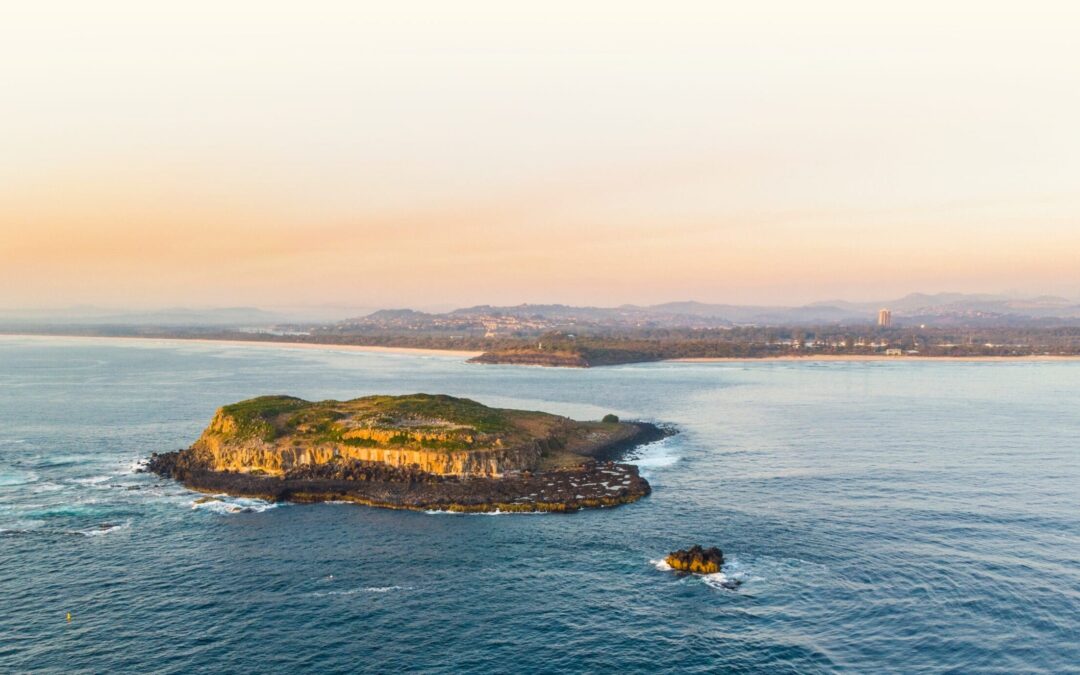
Cook Island Aquatic Reserve is an 80-hectare marine sanctuary 600 metres off Fingal Head, roughly a 20-minute drive north of Cabarita Beach, where green sea turtles feed on the reef year-round and snorkellers share the water with them on guided charter tours. It is one of the most accessible turtle snorkelling experiences on the Tweed Coast.
What makes Cook Island Aquatic Reserve worth the trip?
The reserve sits around a volcanic island originally called Turtle Island, and the name still fits. A permanent colony of green sea turtles grazes the hard and soft corals that cover the rocky bottom, and they are remarkably comfortable around swimmers. On a calm morning you can float within a few metres of a turtle working its way across the reef, completely unhurried.
Beyond the turtles, Cook Island’s underwater terrain is genuinely varied. Boulders form walls and swim-throughs that drop to a sandy floor at around six metres, with soft corals and sponges covering the surfaces. Wobbegong sharks rest in the ledges. Pufferfish, groupers and clownfish move through the coral gardens. In summer, leopard sharks cruise the deeper edges of the reef, and between June and October humpback whales pass through the waters around the island on their annual migration.
The Tweed Coast has plenty of water-based experiences, but Cook Island is the one that stays with people. Something about locking eyes with a sea turtle at three metres depth, no glass between you, tends to rearrange your priorities for the rest of the day.
How do you get to Cook Island from Cabarita?
You can’t swim to Cook Island yourself. The reserve is accessed exclusively by charter boat from Fingal Head, where operators depart from the boat ramp at 10 Lighthouse Parade. From our apartments at Cabarita Beach, the drive north to Fingal Head takes about 20 minutes along Tweed Coast Road.
Watersports Guru is the most established operator running Cook Island snorkelling from the Fingal Head boat ramp. Their tours depart daily at 8am and 10:30am (weather permitting), carry a maximum of nine guests per trip, and cost from $119 per person. The boat ride out takes about 15 minutes.
Cooly Eco Adventures runs a similar experience departing from Chinderah, about 15 minutes north of Cabarita. Their tours leave at 7am, 10am and 1pm, with adult tickets at $149. Both operators include full snorkelling gear, wetsuits, life jackets and an in-water guide, so you don’t need to bring anything except a towel and sunscreen.
The practical rhythm works well from a Cabarita base. Drive up for an early morning tour, spend two and a half hours on the water, and you are back at the apartment by late morning with the rest of the day still ahead of you.
What will I see snorkelling at Cook Island?
Cook Island snorkelling happens in relatively shallow water, generally between three and six metres deep, which makes it accessible for confident swimmers who have never snorkelled before. Tour operators provide a safety briefing and an in-water guide who stays with the group throughout.
The headline encounter is the green sea turtles. They are resident year-round, feeding on the algae and seagrass around the reef, and they are genuinely habituated to snorkellers. Most operators guarantee a turtle sighting from the boat or offer a free return visit, and the hit rate from the water sits well above 90 per cent.
Beyond turtles, the reef supports a dense community of subtropical and temperate species. Expect to see schools of reef fish moving through the coral gardens, clownfish in their anemones, nudibranchs on the rock faces, and stingrays resting on the sandy patches between boulders. Wobbegong sharks tuck themselves under ledges and are harmless to snorkellers, though impressive to spot.
Visibility varies with conditions but generally sits between five and 15 metres. On a calm, clear spring morning you can see the sandy bottom from the surface and watch turtles working their way across the reef below you.
What conditions should I look for before booking?
Cook Island is an offshore reef, so conditions matter more here than they do at a sheltered beach. The key variables are wind, swell and tide, and September through November is the sweet spot.
Light westerly or south-westerly winds keep the surface calm on the eastern side of the island where most snorkelling happens. When north-easterlies pick up above about 15 knots, the surface chop makes visibility poor and operators will often cancel. Swell below one metre is ideal. The shoulder season from September through November typically delivers the lightest winds and lowest swells of the year, which is why water clarity peaks through this window.
Water temperature in September sits around 19 to 20 degrees, warming to 22 to 24 degrees by November. Wetsuits are provided and make a real difference in September. By November, you will be comfortable with or without one.
Tides affect the depth over the reef. A mid-tide is generally best for snorkelling, giving enough depth to swim comfortably without being so deep that the coral detail fades. Your operator will schedule departure times around the tide, so you don’t need to calculate this yourself.
The practical advice: book a morning tour on a day with light winds and low swell in the forecast. The Bureau of Meteorology Byron Coast forecast covers the Tweed Coast and is the one to check.
Is Cook Island suitable for scuba diving?
Yes. While most visitors snorkel, Cook Island is also a popular scuba dive site rated suitable for all certification levels. The maximum depth around the island reaches about 12 metres, with most of the interesting terrain between six and 10 metres. Divers access the walls, caves and swim-throughs that snorkellers can only glimpse from above.
The dive experience adds time with the less visible residents. Leopard sharks rest on the sand in warmer months, grey nurse sharks pass through occasionally, and the crevices reveal species that stay hidden from the surface. Nudibranchs, octopus, cuttlefish and moray eels are all regular sightings for divers who take the time to look closely.
Several operators offer guided dives and introductory dive experiences for uncertified visitors. Check availability when booking, as dive departures run less frequently than snorkel tours.
FAQs
How far is Cook Island from Cabarita Beach?
Cook Island Aquatic Reserve is about 600 metres offshore from Fingal Head, which is roughly a 20-minute drive north of Cabarita Beach. Charter boats reach the island in around 15 to 20 minutes from the Fingal Head boat ramp.
Do I need scuba certification to visit Cook Island?
No. Most visitors snorkel rather than dive, and no certification is needed. Tour operators provide all gear including mask, fins, wetsuit and flotation devices. You do need to be able to swim 100 metres comfortably, and children under six are generally not permitted.
When is the best time of year to snorkel at Cook Island?
September through November is ideal. Water clarity improves as winds ease through spring, swell drops and visibility often reaches its best. Green turtles are resident year-round, and leopard sharks appear through the warmer months from around October.
Will I definitely see turtles at Cook Island?
Green sea turtles live at Cook Island year-round and sightings are almost guaranteed. Most charter operators offer a turtle-sighting guarantee or a free return trip. Hawksbill and loggerhead turtles are also present, along with wobbegong sharks, reef fish and occasionally dolphins.
How much does a Cook Island snorkel tour cost?
Guided snorkel tours start from around $119 per person depending on the operator and group size. Tours typically run for two and a half hours, with 60 to 90 minutes in the water. All snorkelling equipment is included in the price.
Staying at Cabarita Beach puts you 20 minutes from one of the Tweed Coast’s most extraordinary underwater experiences. Cook Island Aquatic Reserve is the kind of day trip that earns its place in the holiday highlight reel. Check our apartments and make the drive up to Fingal Head while the water is clear.
Image credit: Visit the Tweed