
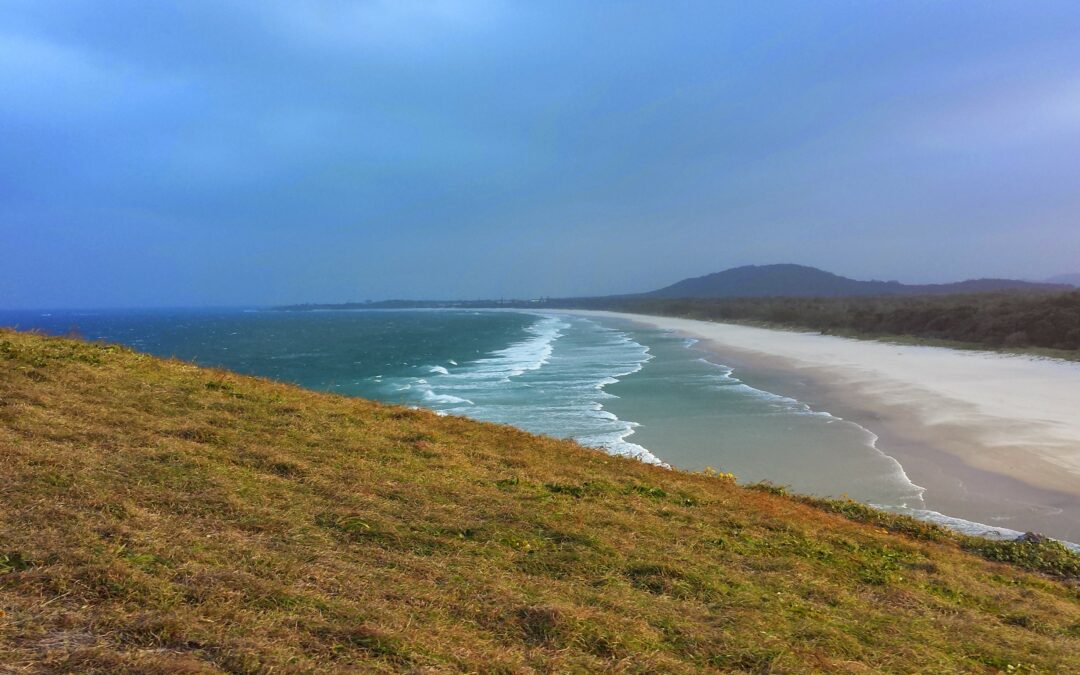
Whale season at Cabarita Beach runs from May to November, and Norries Headland, a two-minute walk south of The Beach Cabarita, is one of the best free spots for whale watching on the Tweed Coast. Come up on a calm morning between June and November and you can watch humpbacks pass close to shore, no boat needed.
We’ve pointed enough guests toward the headland over the years to know it catches people off guard. You don’t have to drive anywhere or book a tour to see a whale here. You walk out our front door, head down to the beach, turn south, and five minutes later you’re standing on a grassy headland watching for the blow. This is what makes Norries Headland whale watching one of the quiet highlights of a winter or spring stay with us.
When is whale season at Cabarita Beach?
The east coast humpback migration runs May to November, and it comes in two distinct waves. The northbound leg starts around May and June as the whales head to the warm Queensland breeding grounds, and it peaks from late June through July, when the highest numbers pass the NSW coast. The southbound return runs August to November. On the way back the whales travel slowly, often with new calves, and they hug the coast far more closely than they do heading north. The NSW National Parks guide to the east coast whale migration has the full picture on the species and the corridor. For us on the Tweed Coast, the short version is simple: June and July for volume, October and November for whales close enough to see the splash from the headland.
Where do you watch whales from Norries Headland?
Norries Headland is the rocky point at the southern end of Cabarita Beach, and getting there from us is genuinely a two-minute walk. From the front door, cross to the beach and turn south along the foreshore. A short track climbs the grassy headland to an open, elevated lookout that faces straight out to sea, which is exactly the aspect you want for the passing migration. The height is what does the work. From up on the point you’re looking down onto the water rather than across it, so a blow or a dark back stands out against the swell in a way it never does from the sand. Bring binoculars and you’ll pick up whales a kilometre or two offshore. There’s no fee, no gate, and no set hours, so you can wander up whenever the sea looks calm.
The best time of day and conditions for whale watching
Mornings win, almost every time. Early in the day the winds are usually lightest, the sea sits glassiest, and a whale’s blow hangs in the still air long enough to catch your eye. Look for that puff of spray first, then scan the same patch of water for a dark back or a tail. Breaches and tail slaps are the showstoppers, but the blow is what you’ll spot nine times out of ten. Calm, clear conditions with light offshore winds are ideal, so it’s worth checking the Bureau of Meteorology’s Byron Coast forecast the night before, the same one we check ourselves. Give yourself a decent window rather than a quick glance, settle in with a coffee, and let your eyes adjust to the rhythm of the swell. Guests who allow an hour see far more than those who pop up for five minutes.
Can you get closer to the whales by boat?
Yes, if you want the up-close experience, a boat trip delivers it, and the nearest tour is genuinely local. Cooly Eco Adventures runs a small-group, safari-style whale watch on an open-ocean vessel capped at twelve guests, departing Chinderah about twenty minutes from us. They head out through the season from June to November to meet the humpbacks on the water, so it’s a good half-morning for anyone who wants to be right alongside the animals. That said, we’d never talk anyone out of the headland. On the southbound leg especially, when the mothers and calves are cruising close to shore, the view from Norries can rival what you’d pay for offshore, and it costs you nothing but the walk. Plenty of guests do both: a boat trip once during the stay, and Norries most mornings.
Questions guests ask us
What months can you see whales at Cabarita Beach?
Whale season runs May to November. The northern migration peaks from late June through July, when humpback numbers off the Tweed Coast are highest. The southern return leg, August to November, brings mothers and calves back down the coast, often much closer to shore, so there are really two windows worth planning around.
Do you need a boat to see whales from Cabarita?
No. Norries Headland is an elevated land-based lookout two minutes south of us, and on a calm morning in season the humpbacks pass within easy binocular range for free. A boat trip gets you closer, but plenty of guests see their first wild whale standing on the headland with a coffee.
Is Cabarita Beach safe to swim during whale season?
Yes. Cabarita Beach is patrolled, with volunteer lifesavers running the flags on weekends and school holidays through the cooler months. Swim between the red and yellow flags, check conditions before you go in, and you can happily combine a morning swim with an hour of whale watching up on Norries.
What should you bring to watch whales from Norries Headland?
Binoculars are the one thing worth carrying, plus a warm layer for the breeze on the headland, sunglasses, and a thermos. Mornings are best, so a coffee helps. A camera with some zoom is handy, though honestly the naked eye is enough when a humpback breaches close in.
Can you see whale calves at Cabarita Beach?
Yes, mostly on the southern leg from September to November. Mothers travel slowly with their newborn calves and tend to hug the coast, which brings them noticeably closer to Norries Headland than the northbound adults in June and July. Late in the season is the best time to spot a calf from shore.
Whale watching from Norries Headland is the kind of thing that anchors a whole winter stay, one of those small daily rituals guests build into the trip without meaning to. If you’d like to know what else fills a Cabarita Beach morning, our Cabarita Beach guide covers the wider area, and the headland is a short stroll from every one of our apartments. Time your stay for the migration and you’ll have the season’s best show two minutes from your door.
Check availability across our whale-season dates and plan your mornings on the headland.
Image credit: Steven Lawler via Wikimedia Commons (CC BY-SA 3.0)