
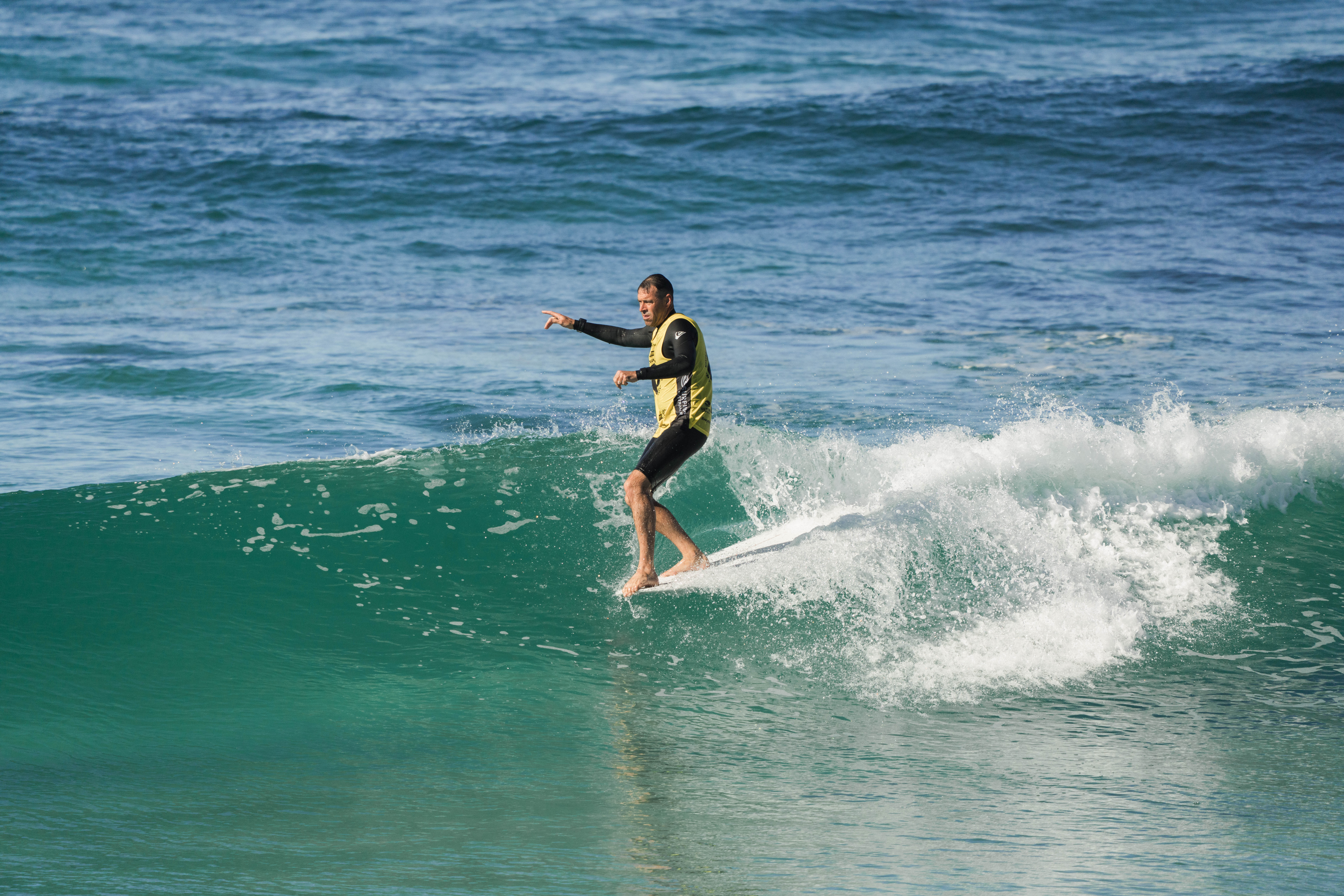
Surfing Australia has confirmed the Australian Longboard Titles 2026 run from 24 to 30 July, with the contest moving up and down the Tweed Coast between Duranbah and Hastings Point. It is the longest-running event on the Australian surfing calendar, every state team competes, and the Open divisions carry a slot in the national team for the ISA World Longboard Championship. For anyone planning to spectate, the question is where to be, when, and how to base a week around it.
We sit roughly in the middle of the contest stretch. From our front door it is a short drive to either end of the coast and a walk straight onto the contest beach on the days the event lands at Cabarita. That positioning is the reason we end up hosting a fair share of state-team families each titles week.
What the Australian Longboard Titles are, and why the Tweed gets them
The titles, also known as the longboard nationals, bring surfers from every state association together under Surfing Australia. It is the Australian Longboard Championship in everything but name. Roughly fifteen divisions run from Under 18 Junior through Open Men and Women to the Grand Legends, so the heats on any given day cover a wide span of ages and styles. The Open results decide the Australian team for the ISA World Longboard Championship later in the year, which puts a sharp edge on the finals.
The Tweed Coast hosts the event because the coastline between Duranbah and Hastings Point gives the organisers a run of point breaks, beach breaks and headland setups inside a thirty kilometre stretch. Conditions in late July are cleaner than the summer peak and the contest director can move the event between beaches as the swell and wind dictate. It is mobile by design. The day’s call goes out the night before through the event channels and on LiveHeats; guests staying with us check that the night before and adjust the morning accordingly.
The week, day by day
Day one and day two are the days for the breadth of the event. Twenty plus heats across the day, every state team in the water at some point, the contest village at its busiest with state tents and the announcer’s calls running through the morning. If you have never watched a longboard event before, this is where the form across the divisions starts to make sense.
Day three to day five are quieter but the surfing tightens. The surfers progressing are the ones still in contention for finals, and mid-morning is the sweet spot once the offshore has set in.
The final two days are the ones to plan around. Open Men and Open Women finals are the marquee heats and the ones that decide the ISA team. The crowd thickens, the call-outs are louder, the surfing is the cleanest of the week. If you can only commit to one day, make it the back end and check the night before for which beach the finals are running at.
Where to actually stand
The contest beach changes day to day. Once the morning call is made, the question becomes where on that beach to set up.
Cabarita Beach is the easiest contest day for guests staying with us. From the apartments, the walk to the contest area at the southern end of the bay is five to ten minutes. Norries Headland gives a high vantage point looking south down the line of the wave, which is the better angle on a longboarder’s turn. Locals sit on the headland with binoculars and the announcer audible from the beach below. Down on the sand, the area just south of the main flags is where the contest scaffold goes up, and the tide line gives a clean view of the takeoff zone.
If the contest is at Hastings Point (12 minutes south of us), the headland north of the rivermouth is the vantage point. The point break wraps around the rocks and the wave runs north, so standing on the headland gives you the full length of each ride. Park in the village and walk five minutes down.
Duranbah is the northernmost contest beach in the rotation, 25 minutes north of Cabarita. The car park behind the dunes gives quick access, and the beach is steep enough that the back of the sand gives a fine elevated view. Fingal Head and Kingscliff Beach can also come into the rotation depending on conditions.
Contest sites fill up by 8am on finals days, particularly the limited parking at Hastings Point and Duranbah. Arriving by 7:30am is the difference between parking close and walking ten minutes from the overflow.
How to make a week of it from Cabarita
The contest is mornings. Heats start around 7am most days and the surfing finishes by mid-afternoon. That leaves the afternoons free. Lunch is back at the apartment kitchen or a village cafe. Afternoons are for the rest of the Tweed Coast: a swim at our home beach, a drive inland into the Tweed Valley, a slower lunch at Pottsville, or the Cabarita Beach walk up Norries for the whale sightings that run through July.
If you are travelling with a competitor, basing in the middle matters more than it sounds. The drive to Duranbah from Cabarita is 25 minutes; to Hastings is 10. From either end of the coast the early starts compound across seven days.
The official event page at australianlongboardtitles.com carries the daily call, the LiveHeats links for the draw, and any schedule changes through the week. Bookmark it on your phone before the trip.
Practical notes for the week
Late July on the Tweed is mild, with daytime temperatures of 20 to 23 degrees and morning starts closer to 12 to 14. Bring layers. The 7am beach crowd is in a fleece and beanie until the sun is properly up, shirt-sleeves by lunch, jumper back on once the sun drops.
Bring binoculars if you have them. The takeoff sits a fair way out, and even a basic pair makes the difference between watching a surfer and watching a surfer’s turn. Bring cash too; the contest village has a coffee cart and a couple of food stalls and lines are quicker with notes.
If a competitor in your party is in the draw, factor in two practice mornings before their contest day. The beaches are open for free surfing outside competition hours, and the surfers who land best are the ones who have read the wave at the contest beach a couple of mornings ahead of their first round.
For a base, our two and three-bedroom apartments give competitors and travelling families room across a week, with a full kitchen for the early starts and direct walk-to-beach access on the days the contest runs at Cabarita. See what is available across the titles week and lock the dates in.
Questions spectators ask us
When are the Australian Longboard Titles 2026?
They run from 24 to 30 July 2026 along the Tweed Coast, with the contest moving between beaches from Duranbah in the north to Hastings Point in the south. Surfing Australia calls the day’s beach the night before, so check the event channels each evening and plan your morning around it.
Which beach is the contest on each day?
It changes daily with the swell and wind. The rotation covers Duranbah, Cabarita, Kingscliff, Fingal Head and Hastings Point. The call goes out the night before through the official event page and LiveHeats, so there is no fixed beach for the week. You follow the daily call.
Is it free to watch the Australian Longboard Titles?
Yes. There is no ticket and no entry fee. You watch from the beach and the headlands for free, from the sand near the contest scaffold or from an elevated headland vantage like Norries at Cabarita. Bring binoculars, as the takeoff zone sits a fair way out.
Where do you watch from at Cabarita Beach?
On Cabarita days the contest runs at the southern end of the bay, a five to ten minute walk from our apartments. Norries Headland gives the best angle, looking south down the line of the wave, while the sand just south of the main flags sits you level with the takeoff zone.
Where do you park on finals days?
Contest sites fill by 8am on finals days, and parking is tight at Hastings Point and Duranbah in particular. Arrive by 7:30am to park close rather than walking in from the overflow. On Cabarita days, guests staying with us skip the parking and walk in.
Image credit: Surfing Australia